By Adam Nash | 911Reviews | October 17, 2026
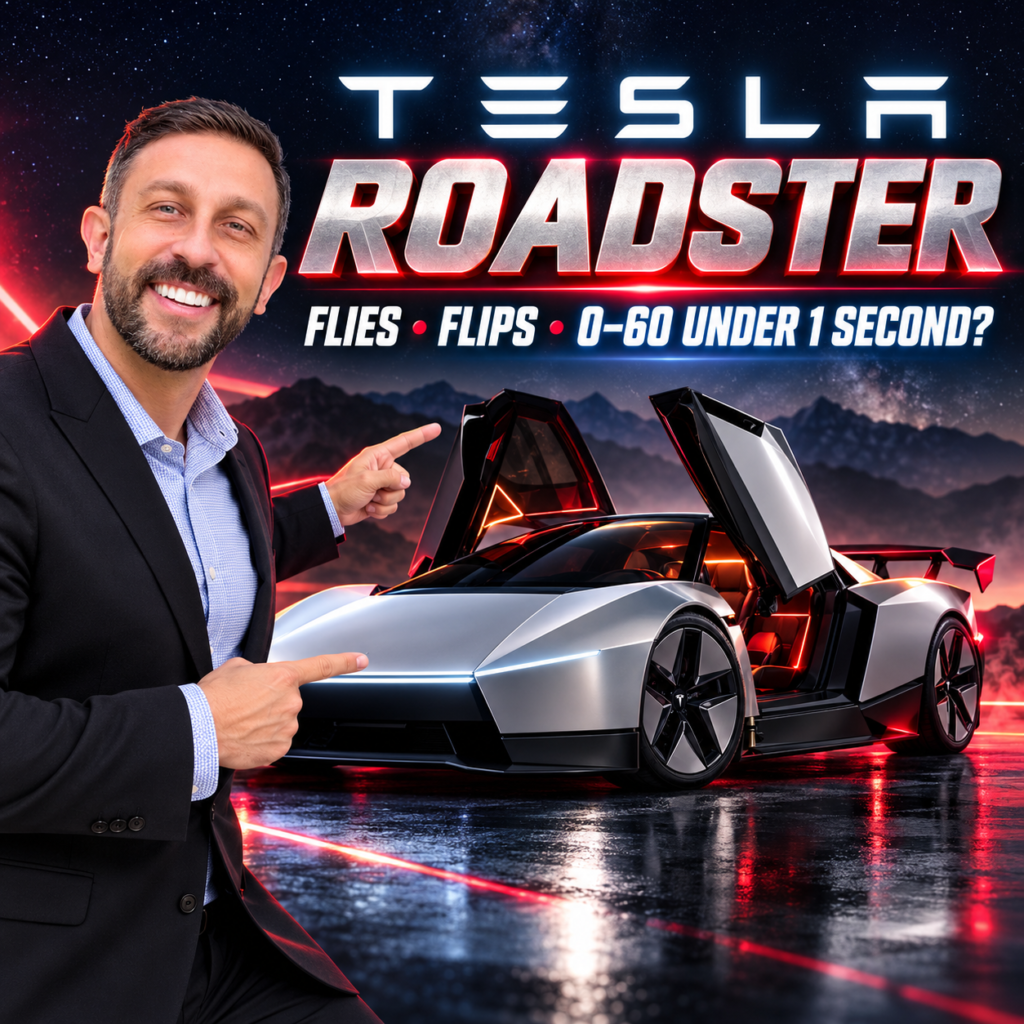
Tesla has unveiled one of the most outrageous electric sports cars ever demonstrated. The redesigned Tesla Roadster can reportedly accelerate from 0 to 60 mph in under one second, drive upside down, and even launch itself into the air.
It’s incredible technology, but after nearly a decade of delays, the biggest question remains: Will Tesla actually deliver it?
A Radical New Roadster
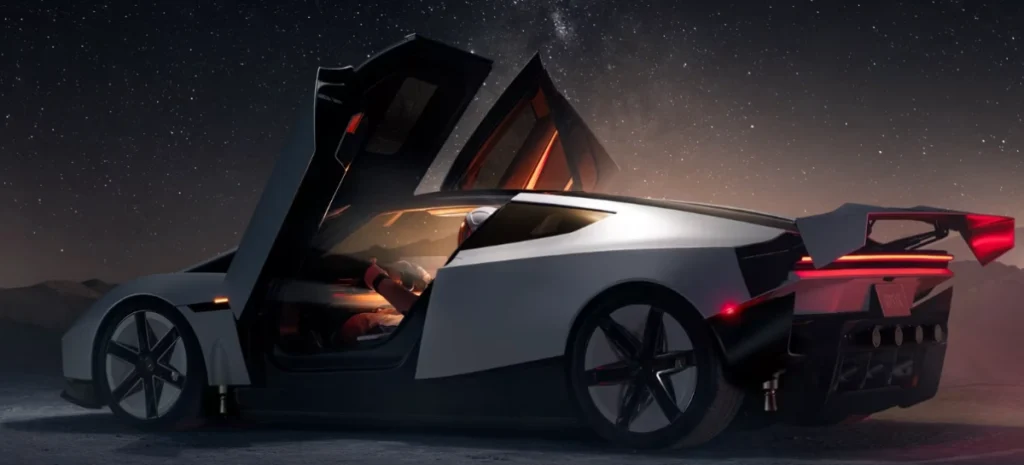
Originally announced in 2017 with a planned 2020 release, the second-generation Roadster has been completely redesigned. The new version features aggressive angular styling, upward-opening doors, carbon fiber construction, and advanced aerodynamics.
Tesla outlined several configurations, each offering increasingly extreme performance.
- Performance: Fan-generated downforce and a claimed 0–60 mph time under 1.6 seconds.
- Thrust: Adds compressed-gas thrusters, potentially reducing acceleration to under 0.9 seconds.
- Rocket: Additional thrusters allow the car to jump and perform aerial maneuvers, with a claimed 0–60 mph time of just 0.6 seconds.
The Rocket version is invite-only and isn’t approved for public roads.
Incredible Technology, Questionable Practicality
Perhaps the most interesting innovation is Tesla’s fan-based downforce system, which creates suction underneath the vehicle to dramatically improve traction. Similar technology has already been demonstrated by the McMurtry Spéirling electric race car.
Unlike flying and flipping, this technology could provide genuine benefits in acceleration, handling, and cornering.
Tesla is also targeting approximately 1,300 horsepower, more than 300 miles of range, and ultra-fast 500-kilowatt charging.
However, the compressed-gas thrusters raise important questions about crash safety, noise, regulations, and everyday practicality.
Can Tesla Deliver by 2028?
Tesla is now targeting 2028 production, eight years after its original promised release date.
And that’s where skepticism becomes reasonable.
Tesla has increasingly focused on artificial intelligence, autonomous vehicles, robotics, and mass-market electric cars. A limited-production supercar may simply not be a major business priority.
The new Roadster is unquestionably an impressive engineering achievement and a brilliant marketing spectacle. But demonstrations and production vehicles are two very different things.
Our Take at 911Reviews
Tesla deserves credit for pushing automotive technology into territory that once seemed impossible. The fan-assisted performance technology is particularly exciting and could have legitimate applications in future sports cars.
But the flying demonstrations feel more like attention-grabbing marketing than practical automotive innovation.
I’d rather see Tesla deliver a reliable, incredibly fast electric supercar than another futuristic promise that never reaches customers.
The new Roadster might be one of the most impressive cars ever built. Now Tesla needs to prove it can actually sell one.
Adam Nash is a technology reviewer at 911Reviews, covering consumer electronics, electric vehicles, and emerging technology.