The electric truck market has largely been dominated by high prices, oversized designs, and increasingly complex technology. Slate Auto appears to be taking a very different approach.
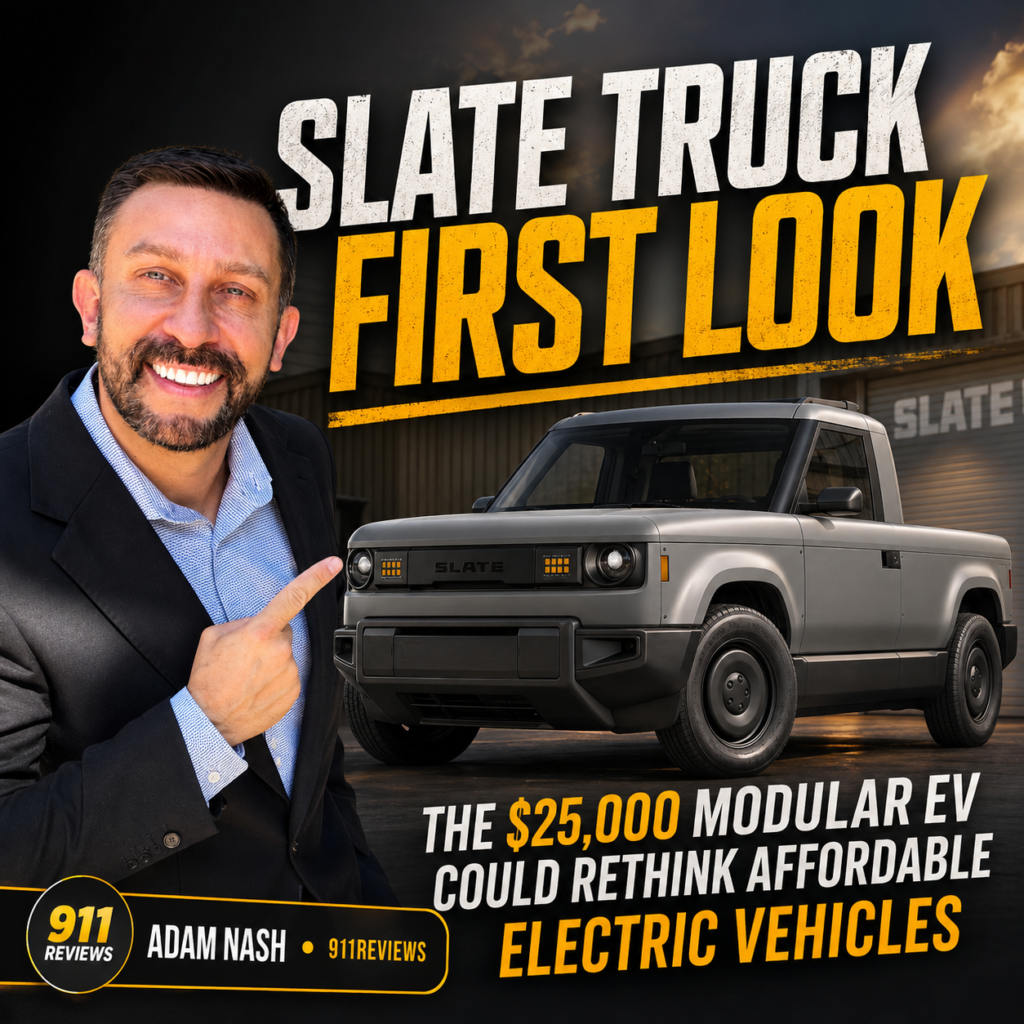
In a recent first-look video from 911Reviews, the upcoming 2027 Slate truck was presented as a stripped-down, highly modular electric vehicle designed around affordability, simplicity, and customization. With a starting price listed at $24,950, the Slate truck is aiming to bring EV ownership to a wider audience by removing many of the expensive features buyers may not actually need.
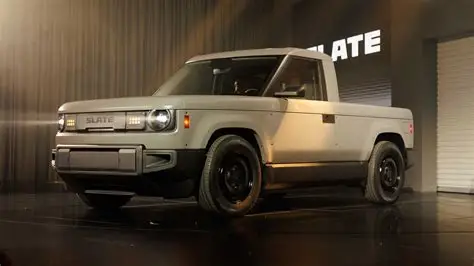
The base model, known as the “Blank Slate,” comes from the factory in a standard slate gray finish. That neutral exterior is intentional. Instead of offering expensive paint options, Slate encourages owners to personalize the vehicle with vinyl wraps, which the video estimates could cost around $500 to $700.
“This is one of the most interesting EV ideas we’ve seen in a while,” said Adam Nash of 911Reviews. “Instead of forcing buyers into expensive trims and packages, Slate is basically saying, buy what you need now and build it into something more later.”
The truck features rear-wheel drive, an estimated 65 kWh battery, NACS charging, and about 205 miles of range. While those numbers may not place it in competition with long-range luxury EVs, that does not appear to be the goal. Slate is targeting buyers who want an affordable, practical, customizable electric vehicle for daily use, local work, or fleet operations.
One of the most unique aspects of the Slate truck is its modular design. The vehicle can start as a compact pickup and later be converted into a five-seat open-air SUV using bolt-on components such as a roll cage and additional seating. That “build-as-you-grow” philosophy could make the truck appealing to owners whose needs change over time.

Amy Nash of 911Reviews said the concept stands out because it feels more practical than flashy.
“So many electric vehicles feel like they are trying to be luxury tech products first,” Amy said. “The Slate truck feels different. It is simple, useful, and customizable, which could make it a great fit for people who just want an EV that works for their lifestyle.”
The interior follows the same minimalist philosophy. The Slate does not rely on a large infotainment screen or premium cabin features. Instead, it uses a small driver display behind the steering wheel for essentials such as speed, range, and regenerative braking information. Options such as smartphone mounts, iPad mounts, stackable center consoles, and different seat materials allow owners to add only what they want.
The exterior design is similarly straightforward. The truck rides on 17-inch steel wheels, includes a five-foot bed, and offers a surprisingly useful front trunk for secure storage. The compact footprint gives it a utilitarian feel, while the modular accessories give owners room to personalize it over time.
During the 911Reviews test drive, the Slate felt responsive despite producing only 181 horsepower. The truck came across as zippy and well-suited for city driving, with strong low-speed torque and a one-pedal driving system that felt polished and confidence-inspiring. The suspension, using MacPherson struts, was firm but controlled.
The Slate truck is not being marketed as a heavy-duty hauler or long-distance road-trip machine. Instead, it appears to be aimed at a segment of buyers that may feel priced out of the modern EV market. By focusing on affordability, utility, and owner customization, Slate Auto may be creating a new category of electric vehicle: one that feels less like a luxury gadget and more like a practical platform.
“For under $25,000, this could be a very disruptive product if Slate delivers on the promise,” Adam Nash said. “The EV market needs more affordable options, and this truck has the kind of simple, clever design that could get a lot of attention.”
Whether buyers use it as a work truck, a personalized city EV, or a modular lifestyle vehicle, the Slate truck presents one of the more intriguing electric vehicle concepts heading toward 2027. In a market where bigger and more expensive has become the norm, Slate Auto is betting that smaller, simpler, and more customizable may be exactly what many drivers are looking for.